
NC State is giving Google a campus stage in Raleigh, and the university does describe something it gets from the relationship. Its AI Accelerator page says students, faculty and staff receive free access to more than 400 Coursera courses and 47 professional certificate courses through December 2030. Google’s general training terms describe different access limits and duration; which terms govern NC State remains unverified. NC State’s knowledge article places Google’s October 13–14 Gemini visit alongside the program’s periodic training visits.
Is Google paying NC State for this event? The official listing, university announcement, related program pages and targeted public searches checked October 13 don’t disclose an event-specific agreement, payment, space charge or waiver, costs, marketing rights or selection decision. That leaves the exchange unexplained. It doesn’t establish that Google paid nothing or that NC State did anything improper. A public university should explain what it gives, what it receives and why this company gets this opportunity.
Google gets more than a place to put a laptop
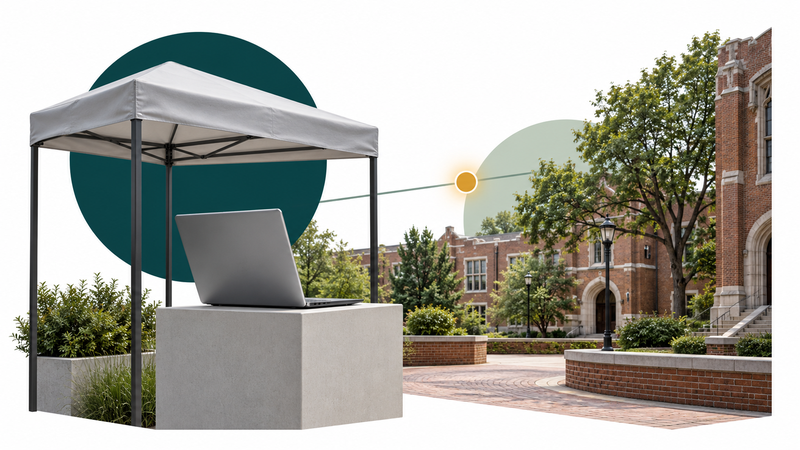
The Gemini Lounge listing schedules product demonstrations, merchandise and meet-and-greets with Google employees at Stafford Commons, beside Talley Student Union, from 10 a.m. to 5 p.m. on October 13 and 14. OIT’s September 15 announcement promotes the student pop-up and October 14 educator workshops with Google product experts, including sessions on assessments and grant applications.
Those are educational opportunities and product promotion in the same program. Google gets a university-announced invitation to demonstrate its tools to students and employees. NC State gets a chance to help its community learn them. The question is whether the university can explain the value of that arrangement beyond the event pitch.
Free training belongs in the accounting
NC State calls itself a Gemini Reference School and Google AI Accelerator member. Its knowledge article describes unlimited seats in the free learning program and lists this campus visit among Google’s training opportunities. That’s a concrete stated benefit. Any argument that Google gives the university nothing would skip evidence the university has already published.
There’s a qualification to that benefit. Google’s general Accelerator terms describe an initial pool of 500 concurrent licenses, conditional expansion and validity through December 31, 2027. NC State’s page describes unlimited seats through December 2030. We haven’t established whether a campus-specific arrangement explains the difference. Neither description lets us declare an actual campus cap or an error.
But course access doesn’t price this particular visit. The pages checked don’t show a dollar valuation, actual course participation or completed certificates, or explain whether the training access is consideration for campus space. I would count useful instruction as part of the return. I would also want to know what NC State spends and what promotional rights it grants before deciding whether the exchange is a good one.
The rules leave room for a deal
NC State’s sponsorship regulation recognizes money, goods and services as possible consideration. It requires prior review and approval for proposed sponsorship programs and places limits on endorsement in qualified acknowledgments. We haven’t established how NC State classified this event.
The current space-use regulation requires a campus sponsor and reserved space for external commercial solicitation. Permitted sponsors include university units, student organizations, student groups and individual students. It allows fees and requires written agreements in specified circumstances. A fee isn’t automatically mandatory, and the rule says hosting alone doesn’t represent university endorsement. None of those provisions tells us this event’s actual charges, approvals or contract terms.
NC State should publish the event arrangement, with any lawful redactions, and explain:
- Any payment, space charge or waiver, and university staffing or facilities costs.
- The training or other benefits it receives and how it values them.
- The company’s marketing rights and any conditions on its campus activities.
- The educational purpose and criteria used to approve this opportunity.
Other organizations should know how to ask
The space-use rule doesn’t require university units to sponsor every commercial request. Nor does NC State’s list of approved AI solutions, which includes multiple providers, explain who gets a campus promotional event. Approval to use a product and an invitation to market it are different decisions.
NC State can choose programs that serve its academic work without promising every company the same stage. It should give other eligible organizations a usable way to seek consideration and explain how it weighs educational value, costs and commercial promotion. Publish the terms and the reasoning. Students, employees and competing providers shouldn’t have to guess what earns access to a public university.