
Duke University’s grant registry now lists a six-year Army Research Office project to develop counter-drone science, led from Durham by professor Miroslav Pajic. The Army office that Duke lists as the awarder is based in Research Triangle Park.
Together, those records link two Triangle institutions to a long-term military research program. Duke says the ICE-CEM center will combine cyber and electromagnetic methods to detect, deceive, disable or potentially control enemy drones.
The limit is equally clear. Duke’s grant record confirms the project title, awarder, principal investigator and Aug. 31, 2026, to Aug. 30, 2032, term. It does not display a dollar value, federal award number, partner funding shares or deliverables. The $24 million figure, consortium structure and defense-hub ambitions remain Duke’s account.
The local signal is the Duke-ARO relationship
The project is local in two supported ways. Duke’s institutional system lists Inducing Cyber and Physical Effects in Unmanned Aerial Systems via Cyber-Electromagnetic Convergence, or ICE-CEM, under Duke and identifies the Army Research Office as the awarder. The Army office describes itself as the Army’s extramural basic-research arm and gives a Research Triangle Park address.
That is more concrete than a generic claim that a federal grant will help North Carolina. It establishes a six-year research structure connecting a Durham university and a Triangle-based federal sponsor around counter-drone warfare. It does not yet establish new local jobs, facilities, startups or procurement.
Pajic earns inclusion because Duke’s grant record names him as principal investigator, while his Duke profile separately lists the same role and project term. Duke Engineering identifies him as a professor of electrical and computer engineering and says he will lead the center.
Duke’s larger claims need outside confirmation
Duke says the Army award is worth $24 million and establishes a six-year cooperative agreement. Its public grant record supports the six-year term but does not show how much money is obligated now, how much remains at Duke or how much may flow to partners.
Duke says the center will include seven universities and Lockheed Martin. That remains a Duke-reported consortium until partner announcements, federal award records or subaward data confirm each role. The current public records reviewed for this article do not show partner allocations, Lockheed Martin’s scope or whether every participant has the same level of commitment.
Duke also says ICE-CEM aims to become a national defense-innovation hub and a focal point for North Carolina’s defense ecosystem. An award can support that ambition. It cannot prove the outcome in advance.
The military purpose is central
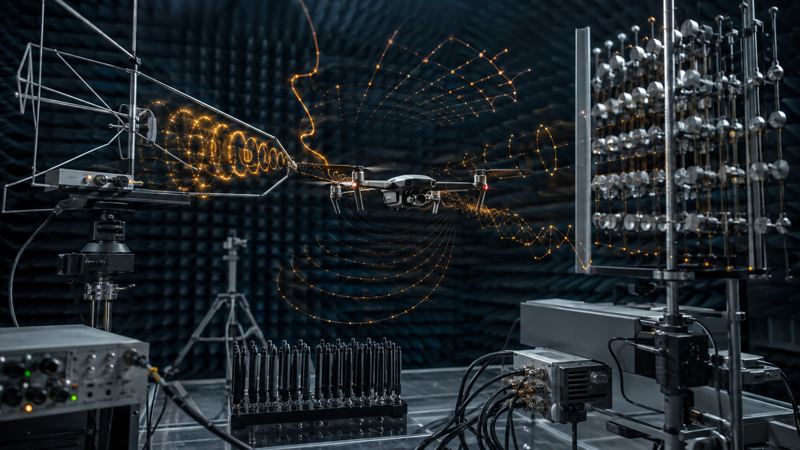
Duke describes ICE-CEM as research into cyber-electromagnetic methods for countering unmanned aerial systems. The university says the work will combine wireless systems, navigation warfare, cybersecurity, edge computing, artificial intelligence and autonomy.
This is not simply another campus AI center. Duke’s stated examples include spoofing GPS signals, inserting false sensor data and overriding a drone’s programming. The university presents those capabilities as tools for protecting U.S. forces from hostile drones. It describes the desired end product as a library of techniques and an autonomous playbook that could select and execute a response.
Those are research objectives, not demonstrated ICE-CEM capabilities. The announcement does not publish performance evidence, safeguards or a governance process for deciding when a technique moves from foundational research into testing or field use. The Army Research Office page confirms the office’s general mission and location, but it does not independently announce ICE-CEM or describe oversight for this project.
The strongest counterargument is that a university grant registry is a credible source for a newly announced agreement, and federal databases can lag. Duke’s announcement also includes a quote attributed to a DEVCOM ARO program manager, though no separate Army notice was located. That is fair. The missing records do not disprove Duke’s announcement. They limit what can be stated as independently confirmed on the project’s second public day.
What to watch next
ICE-CEM will become easier to judge when records show how large, local and governed it is. The next evidence should include:
- a federal award number and the amount obligated now rather than projected over six years;
- subaward records showing which partners receive funding and how much work remains at Duke;
- Army documentation confirming the project’s scope, deliverables and review structure;
- public safeguards for research involving spoofing, software compromise, sensor manipulation or autonomous countermeasure selection; and
- committed local facilities, jobs, procurement or commercialization activity rather than general ecosystem aspirations.
For now, the consequential finding is narrower: Duke is the recorded lead on a six-year Army Research Office counter-drone project, and the Army office tied to the award is itself based in Research Triangle Park. Whether ICE-CEM becomes the $24 million, multi-partner defense hub Duke describes remains an open test.