
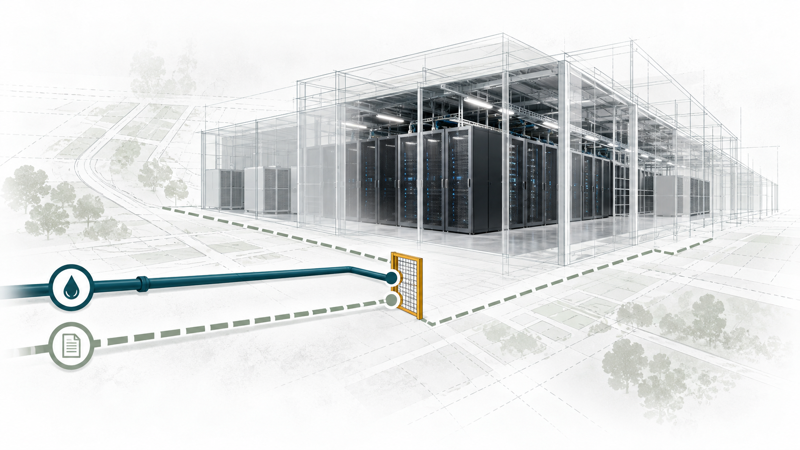
Raleigh’s draft data-center moratorium would pause the city’s acceptance, processing and approval of development applications, including water and sewer extension and connection applications, for facilities that do not qualify for exemptions. It would cover the city limits and its extraterritorial jurisdiction, the area outside city limits where it exercises planning authority. Council has yet to decide whether to adopt it.
The proposed work schedule assigns impact studies and rule drafting to the first 60 days, followed by a final 120-day phase for proposed code changes to go through the legislative process. Qualifying small, unmanned principal-use facilities and certain on-site accessory facilities could be exempt under the draft’s footprint, peak-power and use conditions. Projects protected by the state-law exemptions cited in the draft would also be excluded.
The draft, linked from the city’s September 24 notice, fills the ordinance and workplan gaps identified in our September 17 report. Residents now have specific terms to assess before the October 6 hearing at 7 p.m.
Which facilities could be exempt?
The draft’s exemptions depend on more than building size:
- Principal-use minor data centers: The facility must be unmanned, with no on-site personnel; have a combined building and land footprint of no more than 10,000 square feet; have peak electricity demand of no more than 5 megawatts; and comply with applicable city code.
- Accessory data centers: These must be non-commercial or internal business facilities incidental and subordinate to a permitted use on the site, solely supporting its on-site operations. Data processing cannot be offered as a primary service to off-site users. Staffed facilities can qualify, but the same footprint and peak-demand limits apply, along with code compliance.
- Statutorily protected projects: The draft excludes projects covered by the exemptions in state law, citing N.C. General Statute 160D-107(c). It does not identify which actual projects qualify.
The size test counts the combined building and land footprint, rather than just floor area. The power limit is peak demand. A description such as “small data center” is insufficient to establish an exemption under these proposed conditions.
What the city would do during the pause
The draft would start the pause on October 6 and end it by April 6, 2027, or earlier if council adopts the resulting code amendments.
During the first 60 days, the city would study impacts, draft proposed amendments and examine how other communities regulate data centers under state-law constraints. A team of staff from multiple disciplines would work on policy and impact analysis. The final 120 days would be used to propose necessary amendments through the legislative process.
These are proposed tasks. The draft does not establish that studies are complete or that new rules will be adopted. Its discussion of potential infrastructure and environmental effects supplies the city’s rationale, without measuring harm or costs at a named Raleigh facility.
What to watch next
The October 6 hearing, council’s decision and any revisions will determine the actual policy. If adopted, the first 60-day phase would give residents a specific point at which to look for the promised research and draft amendments.