
UNC Lineberger Comprehensive Cancer Center in Chapel Hill has announced a $40 million grant from OpenAI Foundation to improve the data behind personalized cancer vaccines. The immediate investment is in research capability: measuring potential tumor targets and immune responses so computational models have better evidence to learn from.
The public test is whether other researchers can use those measurements. The foundation promises public, deidentified data, but its announcement does not specify a repository, license or first release date. Better cancer treatment remains a research objective.
What the money funds
Immunologist Benjamin Vincent and computational biologist Alex Rubinsteyn lead the work. UNC says the team will analyze tumor tissue and immune cells from three biobanks and compare vaccine formulations in clinical trials involving triple-negative breast cancer. The release describes the planned research, without an itemized budget or trial registration numbers.
These are treatment vaccines, designed for people who already have cancer. The National Cancer Institute explains that such vaccines aim to teach the immune system to recognize features of cancer cells. Choosing a target that a patient’s immune system can recognize is part of making that approach work.
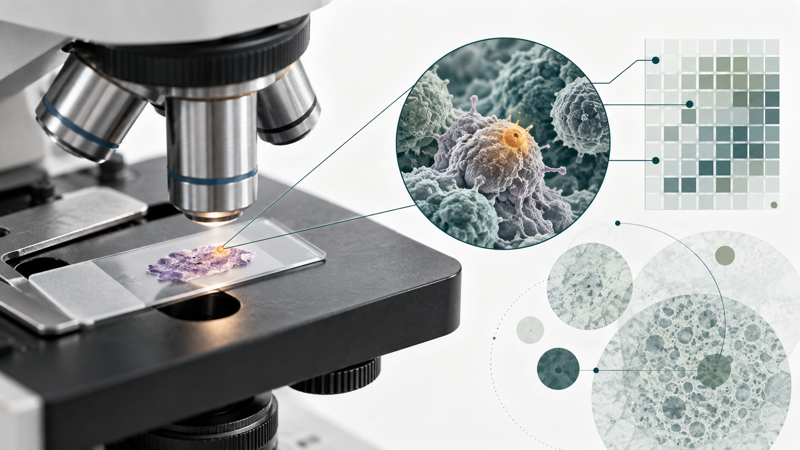
Under the new Initiative for Generative Immunotherapy, the foundation says UNC will measure tumor-surface proteins and patients’ T-cell responses across hundreds of tumors and multiple cancers. Its stated rationale is that sequencing a tumor provides an incomplete substitute for directly measuring the targets it displays and the immune response they provoke.
That gives the grant a specific technical purpose. Researchers would have evidence against which to test target-selection models, including whether their predictions correspond to measured biology. The announcement gives no basis for assigning a dollar amount to that work separately from the clinical comparisons.
There is already a technical foundation
The researchers’ Personalized Immunotherapy Research Lab states an existing commitment to open-source software, sharing experimental data and rapidly disseminating results. Its public tools page lists LENS, a tumor-antigen prediction pipeline, and ACE, software for designing and interpreting assays that measure T-cell responses to candidate protein fragments.
Those tools establish relevant work already underway. They do not establish what the new grant has delivered, or which tools the initiative will use. The useful comparison over time will be what the funding adds to this existing capability.
Rubinsteyn also coauthored the research behind MHCflurry, an openly available prediction tool. Its repository provides models for estimating how protein fragments bind to immune-system molecules, how cells process them, and whether they are likely to be displayed. That is a concrete example of computational target selection. A model score still requires biological and clinical testing.
Useful to whom?
Dataset size alone would be a poor success measure. An independent peer-reviewed study, HLAEquity, examined MHCflurry 2.0 and NetMHCpan 4.1 and found uneven representation of HLA variants, the immune-system molecules that present protein fragments. The authors linked those imbalances to differences in model performance for variants associated with different geographic populations.
The study appeared online in December 2023 and examined older models and datasets. It does not assess this new UNC initiative or establish that its planned data will have the same limitations. It does make the composition of those data a substantive question: which tumors, immune-system variants and patient groups will be represented, and where will predictions remain weak?
Public access needs operating details
The foundation says it encourages grantees to release data regularly and publish preprints, while maintaining privacy and consent. That is a program-level commitment. A timetable and usable access rules would make it possible to track delivery.
NIH’s repository guidance provides a practical benchmark: persistent dataset identifiers, explanatory metadata, quality assurance, clear reuse terms and a plan for long-term availability. This is a comparison standard, not a claim that NIH rules govern the private award.
The guidance also addresses deidentified human data. Consent restrictions, controlled access and a transparent process for reviewing requests can be appropriate. Public benefit does not require putting every patient-derived record on an unrestricted download page. It requires explaining what researchers can obtain, under what conditions, and how they can reproduce the analysis.
What to watch next
The next useful disclosures would turn broad commitments into inspectable work:
- A project budget and milestones that distinguish data generation, clinical research and ongoing maintenance.
- A named repository, first release date and explicit access and reuse terms.
- Documentation of sample composition, measurement methods and privacy protections.
- Evaluation results showing where new data improve predictions, alongside remaining failures.
The funding announcement supports a consequential addition to Chapel Hill’s research resources. Its public value will become easier to judge when another team can find the data, understand their limits and use them to test a result.