
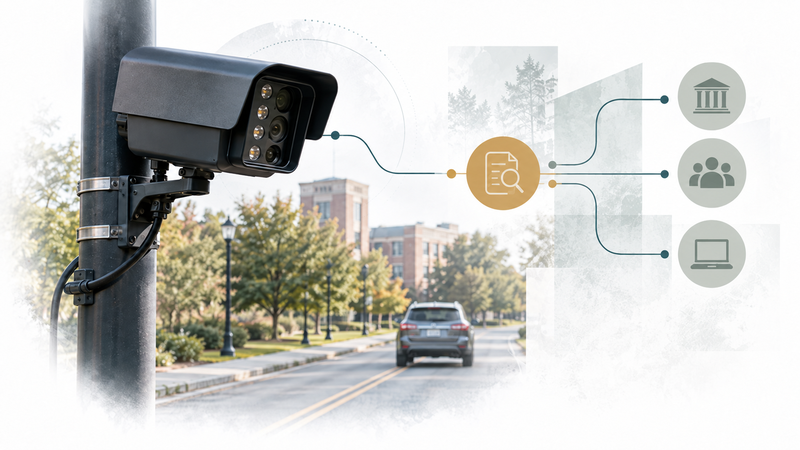
Other North Carolina police agencies must now ask UNC-Chapel Hill for access to its Flock camera records, according to the chief’s account reported by The News & Observer. Automatic sharing has reportedly been switched off. Outside requests remain possible, leaving UNC police to decide whether to grant access.
That puts an extra decision between another agency and UNC’s records. Whether it provides meaningful protection depends on the rules UNC applies. As of October 12, we hadn’t independently verified the settings, written approval standards or audit results in the public police and faculty-governance materials checked.
UNC Police Chief Brian James, whose current role is confirmed in UNC’s own reporting, described the change at the October 5 Faculty Executive Committee meeting. The N&O account says he turned off automatic sharing in recent weeks; it doesn’t give an exact date. James said UNC would still work with agencies making a direct request about a suspect or similar matter.
A request gate needs rules
WRAL reports that outside requests must be vetted before access is granted. James also told the committee that only supervisory-rank staff may access Flock data and must enter a reason for a search. These are the chief’s descriptions of the controls, rather than an independent test of how they operate.
James said search reasons are audited regularly, and that he would notify the faculty committee before restoring automatic sharing, according to the N&O report. Notification would give faculty a chance to question a reversal. It doesn’t establish that the committee can approve or veto one.
For people whose vehicles appear in the records, the next question is what happens when another agency asks. UNC could make the restriction easier to assess by publishing:
- The purposes that qualify for access.
- Who approves requests and records the decision.
- What limits apply to onward disclosure.
- Aggregate audit findings and action taken on improper searches.
Those disclosures could explain the safeguards without publishing individual investigative records. The pages checked didn’t supply those answers, and some exact meeting pages were unavailable. That’s a limit of the public evidence we obtained, not proof that UNC has no policy.
The reported change leaves outside disclosure possible through UNC. A request requirement is a useful place to impose scrutiny. UNC now needs to show readers how that scrutiny works.